Tuesday, June 30, 2020

Lesson About Autocracy from Egypt


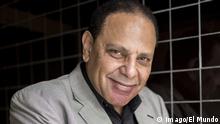
Alaa Al-Aswani is one of Egypt's leading public
 intellectuals. I occasionally transcribe one of his weekly
 columns 
at Deutsche Welle for future reference
.

This latest column by Alaa al-Aswany is about politics in Egypt, but the larger lesson is how autocratic leaders toss aside democratic principles when dealing with each other. America is not mentioned but the parallels are obvious. All happy families are alike; each unhappy family is unhappy in its own way.

~~~
My father, the late Abbas Al-Aswany, was a prominent writer, lawyer, and socialist fighter who was arrested several times for his participation in the struggle against British colonialism. When the military seized Egypt’s rule in 1952, my father was opposed to the Nasser regime because of tyranny and oppression.

I was a child when the war erupted between Egypt and Israel in June 1967 and I was surprised by my father enthusiastically following the news of the fighting on the front, then he told me "God willing, Egypt will win."
I asked him "Are you not against Abdel Nasser?"
He replied "My opposition to Abdel Nasser is one thing, and my support for Egypt in the war is another."

This was a lesson I learned early on and I remember it these days. I am opposed to the Sisi regime, but I support Egypt in its battle against Ethiopia, which built the Renaissance Dam, which will prevent the Nile from Egypt. Egypt is now going through the most difficult crisis it has suffered since the 1967 war because filling the Renaissance Dam with water without observing Egypt's water rights will lead to the loss of Egypt a large part of its cultivated land and the displacement of millions of Egyptian farmers in addition to the severe damage to the electricity produced by the High Dam in Egypt. Here we must understand the following facts:

First: Experts affirm that all that Ethiopia will earn from the Renaissance Dam was possible without infringing on the rights of Egypt, for which the Nile is the only lifeline because it depends entirely on it for agriculture, while Ethiopia relies on rain water. Add to this the presence of many other rivers in Ethiopia and other means of generating electricity in much larger quantities than would be provided by the Renaissance Dam. All these facts confirm that the Renaissance Dam is a political project in the first place and its aim is to place Egypt under the full control of the major powers behind the dam.

Second: The first responsible for this crisis is Abdel-Fattah El-Sisi, who was in power since the construction of the Renaissance Dam in 2011 until now. Al-Sisi was the head of the Military Intelligence, then the Minister of Defense, then the President of the Republic, and in all these positions he failed to perform his duty and misbehaved the file of the Renaissance Dam until we got to the current crisis.

As historians record the period in which we live, they will certainly be surprised by the lightness with which Sisi dealt with this crisis. He signed a principles agreement with Ethiopia in 2015 without specifying the conditions to protect Egyptian rights, which gave Ethiopia what it did not dream of: an official approval to build the dam From Egypt (the country most affected by it), after that it was clear that Ethiopia dodged and maneuvered in order to gain time and finish building the dam to be a reality, but Sisi did not understand this and was drawn into endless rounds of sterile negotiations until Ethiopia finished building the dam.

If we add to all that absurd scene that Sisi made when he asked the Prime Minister of Ethiopia (a Christian who does not speak Arabic) to swear by God the Great that he would not take the water share from Egypt. Of course, the Ethiopian official swore while he laughed at the naivety and frivolity of the scene. Unfortunately, Sisi, like every dictator, reassured the Egyptians that he preserved their rights and that it was not possible to excel from what was until we agreed on the disaster and we saw the Egyptian government begging Ethiopia to delay the filling of the dam even for a few weeks and Ethiopia refuses.

Third: This miserable failed performance by Abdel Fattah El-Sisi accompanied by a campaign of propaganda that depicted the failure as a great success and continued to numb the minds of the Egyptians with lies about the achievements of Sisi and his ability to problem the Renaissance Dam. The Egyptians lived in these lies until they woke up to the catastrophe exactly as happened in the year 1967 When the Nasser propaganda convinced us that we are the biggest striking force in the Middle East and that we will throw Israel at sea, then we agree on the worst defeat in the history of Egypt.

Fourth: Like all dictators, Sisi uses the people of trust, not the people of experience, and he always prefers to surround himself with the drummers and hypocrites. Many experts have warned against the Renaissance Dam and suggested methods for international movement, but the system was excluding them and even Sisi media accused them of employment and treason.

I still remember a lecture I heard five years ago of the global engineer, Mamdouh Hamzah, in which he proved with solid scientific evidence that the Renaissance Dam is a political project in order to subjugate Egypt and even predicted everything that is happening now. Instead of the Sisi regime benefiting from the knowledge of Mamdouh Hamzah, he was referred to trial before the Terrorism Court on the usual fabricated charges: broadcasting false news, questioning the state’s achievements, threatening social peace, etc. .. Thus Sisi excluded loyal national experts and arrested many of them. the crisis.

Fifth: Egypt stands completely alone in this crisis because the Sudanese government has taken a vague, swinging position that is unreliable, and the Gulf countries and Western governments do not move a finger and watch over Egypt as it is fighting a battle that threatens its existence. Regardless of our position on Sisi, it is our duty as Egyptians to support our country in this crisis. As a first step, I suggest that Egyptians residing in America and Europe persuade public opinion in the West of Egypt's legitimate rights that the Renaissance Dam, which violates international law and violates numerous international agreements, will be wasted.

My peace, Egypt

Democracy is the solution.

~~~~

Addendum:That was three days ago. Today, underscoring his points, the online platform Middle East Eye published a link illustrating several points he made about Sisi.

Egyptians who demonstrated in support of Abdel Fattah al-Sisi’s coup in the summer of 2013 likely expected, at a minimum, increased political freedom and an improved economic situation. 
Seven years later, it is clear that demonstrators did not get what they hoped for.
Today, Egypt is more repressive and worse off economically than it was under Mohamed Morsi, the nation’s first democratically elected president, ousted by Sisi just a year into his first term in office.

Military coups almost never lead to greater levels of political freedom, democracy or human rights. Egypt offers a textbook illustration.

Although the one-year Morsi period wasn’t necessarily a model of democratic perfection, it was relatively open, free and competitive, particularly when compared with the current political climate.

The Sisi regime began its reign by promptly rolling back nearly all of the gains accrued after Egypt’s 2011 democratic uprising, including those advanced by Morsi during his brief stint in office. 
The post-coup regime, led by Sisi, immediately shut down opposition media outlets, arrested political leaders, banned leading political parties, and carried out several massacres against protesters. The 14 August 2013 massacres at Cairo’s Rabaa and Nahda squares may constitute the largest single-day slaughter of protesters in modern world history.

Importantly, the post-coup government also passed draconian legislation. A protest law that criminalises anti-government demonstrations has helped the state to imprison tens of thousands of people. Egypt currently holds more than 60,000 political prisoners.

Given the protest law and the broader climate of fear that has enveloped Egypt, it is perhaps unsurprising that Egyptians aren’t participating in ongoing, global Black Lives Matter protests. While there are undoubtedly many Egyptians opposed to police brutality and anti-Black racism, the Sisi government’s history of anti-protester violence, along with its oppressive legal framework, have effectively eliminated any possibility of protest.

Silencing of journalists

The Sisi regime has also succeeded in fostering a singular, pro-regime media narrative. This has been achieved through both the aforementioned media closures and a broader campaign of strong-armed intimidation. 
In particular, Sisi has used Egypt’s press law, penal code, new constitution, and new anti-terror law to silence critical journalists, with articles allowing the government to censor, fine and arrest journalists, particularly on issues relating to Egyptian “national security”. Today, Egypt is the world’s third-worst jailer of journalists.

In 2019, the government blocked tens of thousands of website domains set up to oppose government-proposed constitutional amendments allowing Sisi to extend his rule through 2030.

Earlier this month, the government announced censorship on news coverage of “sensitive” issues, including the coronavirus pandemic, the conflict in Libya, the Grand Ethiopian Renaissance Dam (GERD) and the Sinai insurgency. 
The government also recently arrested journalist Mohamed Mounir over his coverage of the Covid-19 crisis, and relatives of Mohamed Soltan, a prominent human rights defender who writes critically of the regime from his home in the US. Last week, Nora Younis, editor of al-Manassa news website, was briefly arrested after police raided the outlet’s offices and searched its computers.

Meanwhile, pro-Sisi Egyptian media have used the 25 May murder of George Floyd in Minneapolis to deflect blame from brutal Egyptian police and subtly justify their history of violence. Broadcast journalists on pro-government channels have suggested that if police violence is an inevitability in the US, which claims to be governed by democratic norms and the rule of law, it should also be expected in a place like Egypt.

Economic regression

At the same time, Sisi’s major economic projects, including a new capital city and a massive Suez Canal expansion have, so far, been unsuccessful.

Sisi projected the August 2014 canal expansion to more than double annual revenues, from $5.5bn in 2014 to $13.5bn by 2023. Instead, canal revenues have either declined or increased only slightly in each year following the expansion. In 2018/19, revenues were $5.8bn, far below projections.
The Egyptian pound has been devalued from 7.1 per dollar in June 2013 to 16.1 per dollar today. Egypt’s main economic programme under Sisi has been to borrow tens of billions of dollars from the International Monetary Fund (IMF), World Bank, China and allies in the Persian Gulf, among other sources.

Egypt’s national debt has nearly tripled since 2014, from about $112bn to about $321bn. This week, Egypt secured an additional $5.2bn loan from the IMF. Nearly 40 percent of Egypt’s annual budget is devoted to paying off interest on loans.

Loans have enabled the government to boost foreign reserves and other macroeconomic indicators, but microlevel economic indicators suggest that the average Egyptian is struggling mightily.

The price of basic goods has increased dramatically since Sisi took power, and in particular since the launch of the IMF loan programme in late 2016. The IMF required the regime to slash government subsidies on essential goods.

Subordinate allyship

Overall, the country’s poverty rate has increased from 26 percent in 2013 to 33 percent in 2018. According to a 2019 World Bank report, about 60 percent of Egyptians are either “poor or vulnerable”.

Sisi has also received billions of dollars in grants from the United Arab Emirates and Saudi Arabia. These grants have come at a great cost, leaving Egypt beholden to both nations.

In 2016, Egypt handed over two Egyptian islands to Saudi Arabia, and Egypt continues to do the foreign policy bidding of both the Saudis and the Emiratis.

Earlier this month, Sisi threatened military action against Libya’s UN-recognised government. Unsurprisingly, his remarks were received favourably by both the UAE and Saudi Arabia, who have turned the money they’ve spent on Egypt into a relationship of subordinate allyship.

It’s possible that Sisi’s threat was issued with a multi-pronged purpose in mind: to appease his supervisors in Abu Dhabi and Riyadh, and to distract from his government’s gross mishandling of both the coronavirus pandemic and the GERD project.

What does the future hold?

It was difficult enough to make sense of hardline Morsi critics in 2013, when Egyptian liberals claimed, quite absurdly, that Egypt was witnessing a dictatorship more repressive than the one presided over by Hosni Mubarak, Egypt’s dictator from 1981 to 2011. It is almost impossible now.

Indeed, the Morsi period now appears as a lost opportunity. Morsi was obviously not a perfect leader, but the political system enshrined by the post-2011 uprising and 2012 constitution would have allowed for political contestation, and, over the long haul, the breakup of Egypt’s deep state.

Egyptians critical of Morsi, who was killed while in jail last year, would have been better served by seeking to impeach Morsi through the 2012 constitution’s impeachment mechanism, or simply seeking to vote him out of office.

The weeks, months and years ahead under Sisi may prove even more difficult for Egyptians than the past seven have been. The nation has proven itself ill-equipped to handle the ongoing coronavirus crisis, and the ramifications of the GERD project could be far-reaching and devastating for Egypt, which depends on the Nile River for most of its water supply.

Ironically, Egypt’s only hope may be another popular uprising. The hope, for many Egyptians, is that the next popular protest movement leads to more democracy, and not more dictatorship.

Thursday, June 25, 2020

DHS, et al v. THURAISSIGIAM -- Justice Sotomayor's Dissent

Final sections of Justice Sotomayor's dissent in DEPARTMENT OF HOMELAND SECURITY ET AL. v. THURAISSIGIAM.
https://www.supremecourt.gov/opinions/19pdf/19-161_g314.pdf
I curated this important part of a SCOTUS decision for easier comprehension by those of us who are not legal scholars. The pdf document is 98 pages long and this begins a Page 71ff. I abridged the legal addendum and footnote parts as best I understood and welcome corrections and comments.

III
Although the Court concludes that habeas relief is not available because of the particular kind of release that it thinks respondent requests, it also suggests that respondent’s unlawful status independently prohibits him from challenging the constitutionality of the expedited removal proceedings.
By determining that respondent, a recent unlawful entrant who was apprehended close in time and place to his unauthorized border crossing, has no procedural due process rights to vindicate through his habeas challenge, the Court unnecessarily addresses a constitutional question in a manner contrary to the text of the Constitution and to our precedents.
The Court stretches to reach the issue whether a noncitizen like respondent is entitled to due process protections in relation to removal proceedings, which the court below mentioned only in a footnote and as an aside. ... In so doing, the Court opines on a matter neither necessary to its holding nor seriously in dispute below.
The Court is no more correct on the merits. To be sure, our cases have long held that foreigners who had never come into the United States—those “on the threshold of initial entry”—are not entitled to any due process with respect to their admission. ...That follows from this Courts’ holdings that the political branches of Government have “plenary” sovereign power over regulating the admission of noncitizens to the United States.
Noncitizens in this country, however, undeniably have due process rights. In Yick Wo v. Hopkins, 118 U. S. 356 (1886), the Court explained that “[t]he Fourteenth Amendment to the Constitution is not confined to the protection of citizens” but rather applies “to all persons within the territorial jurisdiction, without regard to any differences of race, of color, or of nationality.” Id., at 369; Zadvydas v. Davis, 533 U. S. 678, 693 (2001) (reiterating that “once an alien enters the country,” he is entitled to due process in his removal proceedings because “the Due Process Clause applies to all ‘persons’ within the United States, including aliens, whether their presence here is lawful, unlawful, temporary, or permanent”).
In its early cases, the Court speculated whether a noncitizen could invoke due process protections when he entered the country without permission or had resided here for too brief a period to “have become, in any real sense, a part of our population.”
But the Court has since determined that presence in the country is the touchstone for at least some level of due process protections… As a noncitizen within the territory of the United States, respondent is entitled to invoke the protections of the Due Process Clause.
In order to reach a contrary conclusion, the Court assumes that those who do not enter the country legally have the same due process rights as those who do not enter the country at all. The Court deems that respondent possesses only the rights of noncitizens on the “threshold of initial entry,” skirting binding precedent by assuming that individuals like respondent have “‘assimilated to [the] status’” of an arriving noncitizen for purposes of the constitutional analysis…
But that relies on a legal fiction. Respondent, of course, was actually within the territorial limits of the United States. More broadly, by drawing the line for due process at legal admission rather than physical entry, the Court tethers constitutional protections to a noncitizen’s legal status as determined under contemporary asylum and immigration law.
But the Fifth Amendment, which of course long predated any admissions program, does not contain limits based on immigration status or duration in the country: It applies to “persons” without qualification. ...The Court has repeatedly affirmed as much long after Congress began regulating entry to the country… The Court lacks any textual basis to craft an exception to this rule, let alone one hinging on dynamic immigration laws that may be amended at any time, to redefine when an “entry” occurs. Fundamentally, it is out of step with how this Court has conceived the scope of the Due Process Clause for over a century: Congressional policy in the immigration context does not dictate the scope of the Constitution. In addition to creating an atextual gap in the Constitution’s coverage, the Court’s rule lacks any limiting principle. This is not because our case law does not supply one. After all, this Court has long affirmed that noncitizens have due process protections in proceedings to remove them from the country once they have entered. Perhaps recognizing the tension between its opinion today and those cases, the Court cabins its holding to individuals who are “in respondent’s position.” …
Presumably the rule applies to—and only to—individuals found within 25 feet of the border who have entered within the past 24 hours of their apprehension. Where its logic must stop, however, is hard to say. Taken to its extreme, a rule conditioning due process rights on lawful entry would permit Congress to constitutionally eliminate all procedural protections for any noncitizen the Government deems unlawfully admitted and summarily deport them no matter how many decades they have lived here, how settled and integrated they are in their communities, or how many members of their family are U. S. citizens or residents.
This judicially fashioned line-drawing is not administrable, threatens to create arbitrary divisions between noncitizens in this country subject to removal proceedings, and, most important, lacks any basis in the Constitution. Both the Constitution and this Court’s cases plainly guarantee due process protections to all “persons” regardless of their immigration status, a guarantee independent of the whims of the political branches. This contrary proclamation by the Court unnecessarily decides a constitutional question in a manner contrary to governing law.
IV
The Court reaches its decision only by downplaying the nature of respondent’s claims, ignoring a plethora of common-law immigration cases from a time of relatively open borders, and mischaracterizing the most relevant precedents from this Court. Perhaps to shore up this unstable foundation, the Court justifies its decision by pointing to perceived vulnerabilities and abuses in the asylum system. I address the Court’s policy concerns briefly.
In some ways, this country’s asylum laws have represented the best of our Nation. Unrestricted migration at the founding and later, formal asylum statutes, have served as a beacon to the world, broadcasting the vitality of our institutions and our collective potential. For many who come here fleeing religious, political, or ideological persecution, and for many more who have preceded them, asylum has provided both a form of shelter and a start to a better life. That is not to say that this country’s asylum policy has always, or ever, had overwhelming support. Indeed, many times in our past, particularly when the Nation’s future has appeared uncertain or bleak, members of this country have sought to close our borders rather than open them.
Yet this country has time and again reaffirmed its commitment to providing sanctuary to those escaping oppression and persecution. Congress and the Executive have repeatedly affirmed that choice in response to serial waves of migration from other countries by enacting and amending asylum laws and regulations. In fact, a centerpiece of respondent’s claim is that officials were not following these statutorily enacted procedures. The volume of asylum claims submitted, pending, and granted has varied over the years, due to factors like changing international migration patterns, the level of resources devoted to processing and adjudicating asylum applications, and amendments to governing immigration laws.
For the past few years, both new asylum applications and pending applications have steadily increased… It is universally acknowledged that the asylum regime is under strain. It is also clear that, while the reasons for the large pending caseload are complicated, 13 delays in adjudications are undesirable for a number of reasons.
At bottom, when asylum claims are not resolved in a timely fashion, the protracted decisionmaking harms those eligible for protection and undermines the integrity of the regime as a whole.
But the political branches have numerous tools at their disposal to reform the asylum system, and debates over the best methods of doing so are legion in the Government, in the academy, and in the public sphere.
Congress and the Executive are thus well equipped to enact a range of measures to reform asylum in a number of ways and routinely do so.
Indeed, as the Court notes, the expedited removal process at issue here was created by law as one such measure to ease pressures on the immigration system.
In the face of these policy choices, the role of the Judiciary is minimal, yet crucial: to ensure that laws passed by Congress are consistent with the limits of the Constitution.
The Court today ignores its obligation, going out of its way to restrict the scope of the Great Writ and the reach of the Due Process Clause. This may accommodate congressional policy concerns by easing the burdens under which the immigration system currently labors. But it is nothing short of a self-imposed injury to the Judiciary, to the separation of powers, and to the values embodied in the promise of the Great Writ.
Because I disagree with the Court’s interpretation of the reach of our Constitution’s protections, I respectfully dissent.


Sunday, June 21, 2020

Nursing Homes Notes

I'm saving this comment which I left at a Facebook post.


I don't know how much good reporting it will take but sooner or later the country will be forced to come to terms with the yawning deficiencies of the for-profit medical-industrial enterprise passing for healthcare in America.

I only scanned this link because this has been one of my main hobby horses ever since both of my parents became Medicaid beneficiaries in their final years, despite a lifetime of basically good health, hard work and responsible living.

This line that jumped off the screen at me:
Many nursing homes are struggling in part because one of their most profitable businesses — post-surgery rehab — has withered as states restricted hospitals from performing nonessential services.
The protocol is widely understood. After three days as an inpatient, if someone is discharged directly to "rehab" by a doctor, Medicaid will pick up the bill for 99 days. Rehabilitation, of course, involves all kinds of assistance learning self-care returning to ADL (activities of daily living), presumably before those 99 days have passed.

So far, so good. There they receive physical therapy, occupational therapy, speech therapy, physical and mental exercises and counseling of all types. But the sad fact is that following a debilitating stroke or other reasons for which that first three days in the hospital was necessary, many of them will never leave skilled nursing care. After 99 days they are termed "custodial" and Medicare no longer covers "room and board". Those costs then become the responsibility of the individual or their family, and nursing home annual costs run up to and beyond six figures, well beyond what most residents are able to pay.

That is when they become Medicaid dependents.

I don't know how much Medicaid awards nursing homes for residents, but my guess is that it really is just enough to feed and house them and not much more. Since states control Medicaid disbursements, not Medicare/CMS, my guess is that those amounts vary widely across the country. In any case, about 65% of nursing home residents are Medicaid beneficiaries.

I had one Home Instead assignment watching out for the wife of an old man in charge of his bedridden wife while he went shopping and got a haircut. She had been a stroke victim several years before and he was her sole caretaker with occasional help from their daughter.

I was only there about eight hours and had time to chat with him to learn their backstory. I don't recall how old they were but both were probably in their late seventies or early eighties. She was incontinent, unable to walk or feed herself and spent most of her days in bed. He used a wheelchair to transport her to a lift chair in the living room of their small apartment, or the table where she had to be spoon-fed. He also did the cooking, washing of bed sheets, etc.

Knowing she was a prime candidate for a nursing home, I mentioned about that option and he told me they knew about that and she had already been to a nursing home on three previous occasions -- but only for 99 days, after which he brought her home. He already knew the drill.

I don't know their financial situation but they were not rich people. The apartment was well-furnished. I saw nice decorations and a lifetime of modest keepsakes, but I knew all that would vanish, along with whatever combined incomes they had from their working lives should they be forced to "spend down" to become Medicaid eligible. It was an unforgettable, sad situation which reminded me or my own parents whose only legacy was a few keepsakes, books and memories of a lifetime of hard work and responsible living.

Needless to say, this link touched a nerve.

Friday, June 19, 2020

Credo

One of my Facebook posts this morning was inspired by a note in Garrison Keillor's Writer's Almanac. Today is the birthday of mathematician and mystic Blaise Pascal, born in Clermont, France (1623). At 16, he published an article on the geometric properties of cones, and a few years later, he invented the first mechanical calculator.
I first encountered Pascal in my teen years, questioning one of the contradictions in my church. Southern Baptists believed congregational voting could decide matters of right and wrong but I had been taught that morality is absolute, so it seemed odd to me that public opinion might decide otherwise. I later learned about other denominations, finally becoming a confirmed Episcopalian.

One night in November of 1654, Pascal experienced a divine vision, which he called a “night of fire.” He wrote an account of the experience and sewed it into his coat lining to carry until his death. After that night, he decided to forget the world and everything except for God.

He left Paris in 1655 and went to live in a convent. While living there, his niece was miraculously cured of an eye disease by touching a thorn from the crown of Jesus. He decided to write a book to convert skeptics to Christianity.

Pascal wrote a series of notes and fragments about his thoughts on religion, but he never completed the book. The notes were found after his death and published as Pensées (Thoughts, 1669). In that book, he describes his famous wager, arguing that if God does not exist, the skeptic loses nothing by believing in him; but if God does exist, the skeptic gains eternal life by believing in him. He also argued that it is the heart that experiences God, and not reason.

I never left the faith but during the last few decades congregational voting has caused more division in Christianity, including the Episcopal church, than the early heirs of Martin Luther could have imagined. The Good News meant to deliver Spiritual gifts to all the world has become just another footnote to the annals of religious history. Whether or not to allow LGBT people to join the ranks of the faithful is an echo of the days our deacons planned ways to refuse admission to black people who might show up to "cause trouble" back in the days of segregation. And for many, the matter of elective abortion is far more divisive than anything leading to the the Eighteenth Amendment (prohibition), blue laws and some cities and counties to this day forbidding the sale or consumption of alcoholic beverages.

A few years after encountering Pascal I came across a piece by Kierkegaard which has sustained me in my spiritual journey. I suppose my career in the food business was providential since this refers to cooking.
As a skillful cook says of a dish in which there are already a great many ingredients: "It still needs just a little pinch of cinnamon" (and we perhaps could hardly tell by the taste that this little pinch of spice had been added, but she knew precisely why and precisely how it affected the taste of the whole mixture); as an artist says with a view to the color effect of a whole painting which is composed of many, many, colors: "There and there, at that little point, it needs a touch of red" (and we perhaps could hardly even discover the red, so carefully has the artist shaded it, although he knows exactly why it should be introduced). So it is with Providence.  
O, the Providence of the world is a vast housekeeping, a grandiose painting. Yet he, the Master, God in heaven, behaves like the cook and the artist. He says: There must be a little touch of spice here, a little touch of red. We do not understand why, we are hardly aware of it, since that little bit is so thoroughly absorbed in the whole. But God knows why.  
A little pinch of spice! That is to say: Here a man must be sacrificed, he is needed to impart a particular taste to the rest.  
These are the correctives. It is a woeful error for the one who is used to apply the corrective to become impatient and try to make the corrective the norm for others. That is an attempt to bring everything to confusion.  
A little pinch of spice! Humanly speaking, what a painful thing, thus to be sacrificed, to be the little pinch of spice! But on the other hand, God knows well the man he elects to use in this way, and then he knows also, in the inward understanding of it, how to make it a blessed thing for him to be sacrificed, that among the thousands of divers voices which express, each in its own way, the same thing, his will also be heard, and perhaps especially his, which is truly de profundis, proclaiming: God is love. The birds on the branches, the lilies in the field, the deer in the forest, the fish in the sea, countless hosts of happy men exultantly proclaim: God is love. But beneath all these sopranos, supporting them as it were, like the bass part, is audible the de profundis which issues from those who are sacrificed: God is love.

Monday, June 15, 2020

AJC Opinion: Disappointed, exhausted & calling for change

MOVING AHEAD ON RACE
June 13, 2020
By Kofi Smith


Note: This article is my personal view and does not necessarily reflect or represent the views of the organization for which I work (Atlanta Airlines Terminal Company) or any other organizations with whom I have affiliation. Some might be offended by what I’m about to say. If so, good — because those are the people who need to hear it most. These are my thoughts. And, while I feel like I speak for many other black people, I, of course, cannot speak for an entire race.

When George Floyd took his last breath, it felt as though the final breath of hope was expelled from my body. My soul is broken, my spirit depleted, and I can’t breathe.

His death came less than a month after video footage surfaced of the killing of yet another unarmed black man— 25-year-old Ahmaud Arbery. Pursued by a shotgun-toting white male whose father was also armed, Ahmaud was gunned down in the street while a third white male recorded the hunt.

I have yet to watch the video due to insufficient mental and emotional capacity. Contributing to that weariness is the March 13 death of Breonna Taylor, an unarmed 26-year-old black female EMT and First Responder who was shot at least eight times by police in her home.

I decided that I would wait a while before posting anything about Ahmaud and Breonna to make sure there was no exculpatory evidence that could put the killings in another light. I did not want to jump to any conclusions, as black people are often accused of doing, even though recordings or video footage clearly showed what happened. So, I waited.

But more evidence surfaced that showed just how senseless, brutal and unjustified those deaths were. And other videos that went viral highlighted that many white people still refuse to hear the voices of brown and black people and care nothing about our black lives. Take, for example, the video taken in New York City’s Central Park of a white female, who, on May 25, maliciously called the police on an innocent black man, Christian Cooper, because he asked her to follow park rules.

It was on that exact same day that the cold-blooded killing of George Floyd occurred. A white male cop kept his knee on George’s neck for 8 minutes and 46 seconds — 2 minutes and 53 seconds of which occurred after George became unresponsive. George pleaded, “I can’t breathe,” “Don’t kill me,” and called out for his mother as other citizens begged the cop to remove his knee.

Once again, I have chosen not to watch the video because the written articles and pictures have been enough to sink me into my darkest and lowest place.

For years, I have been suffocating under the crushing weight of white people’s complicity, while desperately gasping for air every time white people allow other white people to take the life of someone whose skin is the same color as mine and my three sons.

The only persons who can help me breathe again are those whose skin is different than mine. So, white people, give me back my breath and provide me with some hope. I need you.

The problem

Let’s be clear, this is not a message from an angry black man.

Long ago, I released myself from the prison of anger and frustration that held me captive due to white people’s lack of regard, respect and care for black people, our children, our lives and our freedoms.

But I am exhausted and disappointed.

How many more times must we, as people of color, scream out we can’t breathe before white people decide to stop choking the life out of us?

I am exhausted by constantly having to hide this reality from my 7-year-old son. I am exhausted by constantly managing my fear for the safety of my sons, my father and my black friends.

I am disappointed in those white people who claim, with empty words and no actions, to care about black people but continue to look the other way when vicious murders occur, year after year, decade after decade.

White males who chase us down and kill us while recording it — that’s NOT the problem.

White cops who murder us — NOT the problem.

White judicial system that continues to acquit — NOT the problem.

A president who, in 2017, tells a group of law enforcement officers “Please don’t be too nice” when making arrests – NOT the problem.

A president who describes demonstrations and protests against injustice as “domestic terrorism,” but refers to white supremacists and neo-Nazis as “very fine people” – NOT the problem.

The above transgressions and atrocities are only symptoms of the underlying problem.

Those who have the power, privilege and voice to bring an end to the despicable behavior of others, but choose instead to tolerate, condone or ignore this malicious behavior – THAT is the problem.

If you remain silent, sanctioning racist behavior, you are the problem.

It is just not good enough to claim that you are not a racist. You have to become anti-racist.

What not to say

Please stop saying you are color blind. You are not.

Even if you actually had a color-deficiency condition, you clearly see my color — and I want you to.

I understand what you are trying to convey, and I really do appreciate it. But I need you to see my color. I need you to appreciate and empathize with everything that comes along with my color. We, as a people of color, are proud to be black. We love our blackness. We appreciate everything our ancestors endured.

See my color, but do not judge me by it.

If you were silent when you found out about George Floyd’s killing, please stop saying you care about law and order. You do not.

If the law is a concern, you should have been clamoring for the immediate arrest of the white cops who murdered George and the white men who murdered Ahmaud. Why do white males who kill innocent and unarmed black people continue to be acquitted?

Please stop criticizing our response.

We are challenged every single day to figure out how to cope with our internal stress, fears, depression, pain, hurt and exhaustion. We do not need your criticism right now. It adds fuel to an already blazing fire.

Please stop saying “all lives matter.”

Black people understand that all lives matter. But, in order for that statement to be true, then black people must be included in the “all.”

The overwhelming truth is that, for too many white people, black lives do not matter.

What to say and do

I am not trying to castigate the entire white race. I do not believe all white people are bad, nor do I believe all white people are racists. On the contrary, I believe the majority of white people are good and decent human beings with beautiful hearts and good intentions. However, it is no longer acceptable to have a good heart, good intentions and remain silent.

We need you — I need you — to step up, step out, stand up and speak out.

In the past, white people have done this, even when it meant putting their lives and reputations at risk. Their sacrifice and courage helped to create change for black people.

If you want to see examples of what stepping up, stepping out, standing up and speaking out looks like, look at the photographs of the amazing white women in Louisville, Kentucky, who formed a human barrier between black protesters and police.

Look at the awesome actions of Sheriff Chris Swanson in Flint, Michigan, who took off his riot gear and walked with demonstrators.

At this point, the words are not enough — you must put your words into collective action.

If you really want to make an impact, go big and hopefully become a catalyst for lasting change.

Here’s my big idea and my plea for action: I’m asking all white leaders, CEOs, athletes, actors and politicians to use your influence to galvanize the white community to gather in Washington, D.C., and flood the National Mall with your beautiful faces for the Million White March.

Black people did it in 1995 for the Million Man March. It was the most amazing gathering I have had the privilege to attend.

How much more amazing would it be for us to see you standing for us.

Dr. Kofi Smith is president and CEO of the Atlanta Airlines Terminal Company, which manages the facility operations for Hartsfield-Jackson International, the world’s most traveled airport. He discussed and explained this outpouring of the heart on Bill Nigut's radio discussion, Political Rewind. He joins the hour-long conversation at about 26 minutes

Political Rewind: Weekend Of Protest As Demonstrations Continue
By BILL NIGUT