Friday, June 21, 2013

Grandpa Stopped Driving

Trite but true: many old people don't want to give up driving, even when safety becomes more important than convenience. We have all seen this reality. Mention the subject and most people can rattle off stories running from amusing to tragic.

A few wise individuals are exceptional, however. They understand that they have two options: either make the choice themselves or wait until it is made on their behalf by factors out of their control.


(Giving up driving is a matter of control but most people never realize that real control is that which is delegated. Successful politicians and business people know this because they trust themselves to be good judges of other people. Unfortunately, most people never develop that level of self-trust. They probably know know how untrustworthy they are themselves but that is another line of thinking.)

A very wise resident where I once worked said, "I'm a good driver. I never had any accidents. But I stopped driving when I was ninety-seven. I knew if I was ever in an accident it would be my fault because I was ninety-seven. Even if it wasn't my fault it would still be my fault because I was ninety-seven, so I decided it was best to stop driving." This remarkable woman lived to 104 and was a model of grace, wit and cheerfulness to everyone around her. And no one could pick her out of a crowd of people under seventy. I think she aged more slowly because she made good personal decisions about everyday matters.

My wife's Grandpa was cut from the same fabric. After he died this note was found among his writings. It is a draft copy of a notice he sent to his insurance agent after a minor driving incident that was a wake-up call he was able to hear.

Bradenton, Fla.
Dec. 21, 1973

Mr. Stewart Rogers
Nationwide Insurance
Kenton, Ohio

Dear Mr. Rogers:

This note is to inform you that I have changed my position in the car to the right side. My wife Mary will be the principle driver. Her driving record is excellent. No accidents in the 31 years of our marriage. She is only 73 years old and very alert.

Life is activity, and time takes its toll. It is regrettable that for some of us who tarry too long, must be realistic and phase out our former activities one by one and replace them with other avocations, which we may safely do, and keep us happy and usefully occupied until the great transition.

Sincerely,
F.M.Smith
Age 86


I didn't change the syntax of that last sentence because it captures exactly the mood of the letter as it stands. Besides, that is exactly what he wrote. Notice he never said plainly that he was not going to stop driving, but it is clear from what he wrote that even at 86 he was able to recognize and accept the limitations of age as they came along.

Grandpa had a rich and varied life which included, among other experiences, owning and operating one of the first motorcycles in his community, an Apache. He said he and a friend loved the noise and excitement of driving their motorcycles through the countryside. 
(Click for larger image)
(This is reposted from my old blog.)


Thursday, June 20, 2013

A Five-Minute Test for Three Cancers Which Costs Pennies

Jack Andraka is a fifteen year old freshman in high school. He developed a paper sensor to detect pancreatic, ovarian and lung cancer in five minutes for as little as 3 cents.
Watch this video. 
Follow up with your own link search. 
Then spread the word. 

Wednesday, June 19, 2013

Morning Twitter Messages -- June 19

Serious takedown of President Morsi...
Did you know that when Morsi went to beg Russia for money and wheat, he openly declared that his position is in complete alignment with the Russian position, which is pro-Assad, just because they promised him they might think of lending him money or wheat? 
Did you know that this conference took place, not two days after the Obama administration’s announcement that they will fund and arm Syrian rebels? Did you know that this conference got held exactly two weeks before the 30 June demonstrations, at a time when the Muslim Brotherhood is desperate for any Islamist support to cling to power? Did you know that in Morsi’s 6th of October speech last year, he managed to fill the 80,000 seats of the Cairo stadium with his supporters, but in this speech he opted for the covered dome, which only holds 16,000 seats? Also, did you know that opposing the ruler in Egypt is against religion and God, but opposing the ruler in Syria is holy Jihad?
How can one not love this mess?
[...]
Had Morsi truly wanted to help Syrians, he would have issued some initiatives that would help the estimated one million Syrian refugees in Egypt so as not to suffer daily humiliation. He could have issued a directive that equalised the degrees of educated Syrian with that of Egypt’s to allow Syrian doctors and engineers a chance to work in their vocations. He could have given them all work permits, thus giving the Syrian refugees a method to exist, work and survive in Egypt legally. He could have banned the practice of selling Syrian women as wives to Egyptian males that happens in Salafi mosques. Instead, in a grandiose move, he shut down their embassy, which is the only place that provided Syrian refugees access to crucial consular services, and helped them get to their next destination if they wanted out of Egypt. Dear Syrian refugees, you can start thanking us any minute now.

Very worthwhile read here, once you wade through the Haaretz pop-up ads. 
Khaled Diab is an Egyptian-Belgian journalist, blogger and writer who has spent about half his life in the Middle East, including nearly two years in Jerusalem, and the other half in Europe.
Even if Turkish protesters manage to bring down Erdogan, they are in danger of ending up, at least in the immediate aftermath, with something worse – though in Turkey, this is more likely to be a return to military-sponsored semi-authoritarianism – if they fail to formulate and implement a far-sighted transitional vision. 
Although the risk of sliding towards authoritarianism afflicts all societies, the modern Middle East seems particularly prone to this. But what is the reason behind this?
Some Western academics and scholars argue that it is something intrinsic to Islam. While there are many problems associated with Islam, I do not think it is any more prone to absolutism than its Abrahamic cousins and other religions. 
I would say that, in much of the region, it is more a product of the legacy of Ottoman and European imperialism, the authoritarian tendencies of post-colonial leaders, both former masters and subjects, and how “modernization”, even if triggered by popular uprisings, eventually became a top-down process that did not involve the masses sufficiently.

“The prime minister, army chief and chief ministers should sit together and form a policy on drone attacks,” Imran told parliament.

“We have to make this war our war, and it cannot become our own war unless we stop drone attacks.”

According to the British Bureau of Investigative Journalism, since 2004 up to 3,587 people have been killed in Pakistan by drone attacks, and critics argue the civilian deaths they cause encourage people to join militant groups.

But the Washington views them as a vital weapon in the fight against militancy and the programme scored a notable success – in US eyes – earlier this month by killing the deputy commander of the Tehreek-e-Taliban Pakistan (TTP).

Imran said he was not in favour of shooting down drones, as some in his own party have urged, but called for a more concerted diplomatic effort.

Yep.
Al Jazeera's Jane Feguson said the Taliban threat to continue with its attacks reflected that the armed group had been emboldened by its perceived successes on the battlefield.
"Zabihullah said it was those attacks in the first place that forced parties on the ground to the negotiation table. It shows a real confidence on the side of the Taliban when they say that," she said. 
"They see themselves in the driving seat of these peace negotiations rather than having to make any military concessions on the ground," she said.

"It seems that the Taliban are trying to push for a two-pronged approach to what they would see as a victory: The diplomatic approach in Doha as well as the military approach." 
The US military presence in Afghanistan is roughly 66,000 troops, after having reached a peak of about 100,000 forces. 
US officials cautioned that the peace process would likely be messy and has no guarantee of success. 
"It's going to be a long, hard process if indeed it advances significantly at all," a senior US official said.

I read that a couple of the  detainees at Gitmo were children when captured several years ago,  ages 14 and 16. What must it be like to become an adult as a detainee there?

Human rights groups have long protested the detention of suspected enemy fighters who haven't been charged with crimes.

The government says the detainees are too dangerous to transfer but cannot be tried, characterizing them as war prisoners under the 2001 Authorization for Use of Military Force Act.

Obama has recently renewed his vow to shut the prison established last decade to house suspected terrorists.

The open letter from the doctors came a day after the federal government was forced to release the names of dozens of detainees at the military prison after a newspaper sued the federal government for the information.

The list released Monday identifies 46 inmates being held for "continued detention" at the facility. The report was made public after a lawsuit by the Miami Herald. The Obama administration first acknowledged that detainees were being held indefinitely in Guantanamo in 2010 but didn't make their identities public until now.

Of the 46 detainees listed for indefinite detention, the report shows that 26 are from Yemen, 10 are from Afghanistan, three are from Saudi Arabia, two each are from Libya and Kuwait, and one each are from Kenya, Somalia and Morocco.


While tangling with the leaders of two cold war antagonists of the United States is nothing new, the two bruising encounters in such a short span underscore a hard reality for Mr. Obama as he heads deeper into a second term that may come to be dominated by foreign policy: his main counterparts on the world stage are not his friends, and they make little attempt to cloak their disagreements in diplomatic niceties.

Even his friends are not always so friendly.
On Wednesday, for example, the president is to meet in Berlin with Chancellor Angela Merkel of Germany, who has invited him to deliver a speech at the Brandenburg Gate. But Ms. Merkel is also expected to press Mr. Obama about the National Security Agency’s surveillance programs, which offend privacy-minded Germans.

The new canal will be 22 meters deep and 286 km long - bigger than Panama and Suez in all dimensions. It will allow passage for mega-container ships, called post-Panamax, with a dead weight of up to 250,000 tons and a capacity to hold 18,000 containers, almost 4 times the capacity of the so-called Panamax ships that can go through the Panama Canal.

The new canal could almost double the nation’s per capita GDP, which was estimated at $3,300 last year, proponents say,

Yet another reason for the canal to be constructed is that the average wait for a ship to transit the Panama Canal can be 12 days.


[Very long read. I'm printing it out as I type. Twelve pages. If Laura Rozen sez it's good, that's all I need to know. It was her RT.]

Tuesday, June 18, 2013

Meet Standing Man -- A New Non-violent Form

Standing is the new sit-in. I love it.  


Turkish choreographer Erdem Gunduz (C) stands on Taksim square following what had been a lone protest June 18, 2013. Gunduz stood for several hours unnoticed before his presence on the flashpoint square went viral on the social network Twitter. He was then joined by hundreds of others who in solidarity decided to join his protest by standing for hours on end.(AFP)


#duranadam Silent protest. This lady sits and reads since 3am it says on the sign
"Don't disturb me. I am reading". Like her we saw some others just standing. 
https://www.facebook.com/photo.php?fbid=10151429353471881&l=4886a22acf


Sunday, June 16, 2013

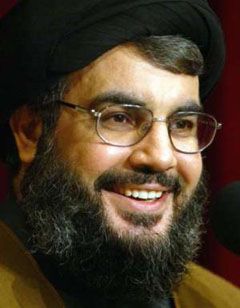
Nasrallah In the Front Lines of Hezbollah


This is worth a separate blog post. The Twitter comment is right. Leadership like this is what movies are made of. Intervening in the Syrian conflict on the side of Assad's forces may look like a gamble from across the ocean, but the situation must appear very different for those at the scene. This is not a good sign for those waiting for Assad to fail.

Read this first-person report. It's more like a screen play than journalism. Follow the links for a fuller picture. Ali Hashem is an Arab journalist who is serving as Al Mayadeen news network's chief correspondent. Until March 2012, Ali was Al Jazeera's war correspondent, and prior to Al Jazeera he was a senior journalist at the BBC. 
Just days after the fall of Qusair in southwest Syria, the city started receiving visitors. Some were returning residents looking for what was left of their homes and properties, while others were only passersby who wanted to see what had happened to the city. There was a third category: Probably Hezbollah Secretary-General Sayyed Hassan Nasrallah fits in.

It was my last day in Qusair, and the security measures taken there weren’t as restrictive as in the previous days. When I asked, the only answer I received was that every day there are new orders. “Probably the Syrian President Bashar al-Assad will pay a visit to the city, a visit similar to the one he paid to Baba Amr in Homs after the regime took control of it,” a colleague of mine suggested but never confirmed. Later, a Syrian officer told us that a high-profile Syrian official (not Assad) will arrive soon in Qusair
After I had been a couple of hours in the city, no one had arrived. I decided to move around the city to look for returning residents for a possible interview or package. In the center of the city, I stood in the middle of the main road as a huge, black four-wheel-drive came my way. 
I stared at the man sitting beside the driver: The face was familiar, but something was missing. It was clear I was face to face with Hezbollah Secretary-General Sayyed Hassan Nasrallah, without a turban, wearing a military uniform. He smiled and nodded to me, and while I was still in shock, the car was out of sight. There was no convoy, only one car, but as I said before, there were security measures taken in the city and around. 
It took me some time to confirm that whom I saw was Nasrallah. When I returned to Beirut, I started my investigations to confirm it and I did. 
While investigating, I came across another piece of information: that this visit wasn’t the first for Nasrallah to Qusair during this very crisis. “Sayyed Nasrallah went to Qusair a day before the start of the battle: He met the commanders, visited some injured fighters and gave a speech,” a source close to Hezbollah told me, “He spoke for around half an hour with his main commanders exchanging ideas on the battle and the expectations and how many days it’ll take them to finish it.” 
As for the latest visit, the one day after the offensive, our source said that Nasrallah visited the city of Qusair and the towns around it in the country side. He added, “Sayyed Nasrallah wanted to thank the fighters personally, he met them, met the injured, and went around the area.” 
I asked the source how Nasrallah is able to move from Beirut to Qusair in Syria and sometimes travel to Iran while Israel is saying that he is hiding. 
“It’s a hide-and-seek game,” he replied, “Nasrallah's security apparatus is professional enough to know when to move and how. No one knows what they do and what their measure are, we only know when things are done.” 
Nasrallah’s visit to Qusair shows once again that the group’s fight in Syria isn’t a matter of interests, it’s a matter of existence.